
SEO in 2026: Why Ranking Alone is Dead & What Actually Wins Now SEO has changed more in the last three years than it did in the previous ten. What worked in 2012 doesn’t work today.What worked in 2016 is outdated.What worked even in 2022 is now being replaced by AI-driven search behavior. And in 2026, one truth is clear: SEO isn’t dead. Ranking-only SEO is. Search is no longer just Google.Traffic is no longer the only metric.And keywords alone don’t control visibility anymore. Let’s break down what truly matters in SEO today and how businesses must adapt to dominate search in the AI-first era. The Evolution of SEO (And Why Everything Changed) 2012 — Mechanical SEO Era SEO used to be simple: Find a keyword Put it in title, H1, meta Build backlinks Rank It was formula-based and predictable. 2014–2016 — “Content is King” Era Marketers believed: Longer blogs = better rankings More content = more traffic Publish frequently The SEO race was about volume. 2020–2022 — Experience & UX Era Google shifted focus to: Core Web Vitals Mobile-first indexing Page experience Ranking wasn’t just about words anymore — it became about how users interacted with your site. 2023 — AI Disrupted Search AI changed everything: How content is generated How users consume answers How decisions are made Search became instant, summarized, and conversational. Users stopped clicking multiple links.AI started delivering direct answers. SEO in 2026 is a Different Game Today: Competition is massive Search platforms are everywhere Users rely on AI for decisions Google is no longer the only gateway People search on: Google ChatGPT Perplexity AI assistants Voice search Communities This means SEO now equals omnipresence + authority, not just rankings. Rule #1: Visibility > Clicks Zero-click searches dominate results. AI gives users answers without visiting websites. So winning SEO means: Being mentioned in AI Overviews Being cited in AI tools Becoming the trusted answer source Even without clicks: Brand searches increase Direct traffic rises Conversions improve Modern SEO builds brand authority first — traffic follows later. Rule #2: Keyword Research is Now Intent Research Old SEO: Volume Difficulty CPC New SEO: Intent Query depth Topic relevance Conversational searches Google and AI want context, not keyword stuffing. Example: Old Target:“Best SEO Tools” New Winning Topics: Which SEO tool is worth paying for in 2026? SEO tools that failed me and why Real comparison based on experience SEO has shifted from keywords → topical authority. Rule #3: Generic AI Content Will Not Rank Search engines and AI prefer real human signals. Avoid: Rewritten blogs Paraphrased fluff Copy-paste content What wins: Opinions Real examples Case studies Data Screenshots Experience Authenticity is the new ranking factor. Rule #4: Real E-E-A-T Happens Outside Your Website Google now evaluates brand authority beyond your site. Not just: Author bio About page But: Brand mentions across the web Industry trust Being referenced by others People searching your brand Trust signals come from visibility across platforms. Rule #5: Link Building Has Changed Backlinks still matter — but the type has evolved. Winning links: PR mentions Brand citations Podcasts & interviews Contextual mentions Natural no-follow mix Spammy backlinks don’t help anymore.Authority links do. Technical SEO Still Matters (But Differently) Technical SEO won’t make you rank. But ignoring it will make you disappear. Still critical: Site structure Page speed Indexing control Proper headings Sitemap & robots Think of tech SEO as the foundation — authority is the growth engine. Final Truth About SEO in 2026 SEO today is about: Visibility over clicks Authority over keywords Brand recall over traffic spikes Multi-platform discovery AI citations Businesses that adapt will dominate search.Those stuck in old ranking tactics will slowly vanish. Want to Rank, Convert & Scale in the AI-First SEO Era? Most businesses are still using outdated SEO methods from 2019. If you want a modern SEO strategy built for: Google + AI search Brand authority growth Lead generation Future-proof visibility Let’s work together. “If you’re a startup or business owner who wants help implementing real SEO & digital growth strategies that actually bring leads, feel free to connect through brandingwithsurendra.com“ Ask About My Services Join Course
Lazy SEO for Startup Founders: 7 Fast & Low-Budget Tactics That Drive Traffic
Lazy SEO for Startup Founders: 7 Fast & Low-Budget Tactics That Actually Drive Traffic SEO is one of the most powerful growth channels for startups — but also one of the most ignored. Why? Because founders believe SEO needs: A big team Expensive tools 6–12 months of waiting Endless blog writing But early-stage startups don’t have that luxury. The good news?You don’t need traditional SEO to start winning. You just need smart, leverage-based strategies that give faster visibility, authority, and traffic with minimal cost. In this guide, I’ll break down 7 “lazy but effective” SEO tactics startup founders can use right now. Why Traditional SEO Doesn’t Work Well for Early Startups Most SEO strategies are built for established brands with: Existing authority Backlink profiles Content teams Budget for outreach Startups struggle because: New domains have zero trust No backlinks = no ranking Hard to compete with big sites Slow content production So instead of playing the long game first, you use shortcut channels to build authority faster. 7 Lazy SEO Tactics That Actually Work 1. Earn High-Authority PR Backlinks for Free Journalists are constantly searching for expert opinions to include in articles. You can use platforms like: HARO (Help a Reporter Out) Qwoted How it helps SEO: Backlinks from DR 70+ websites Google sees you as a trusted source Boosts rankings faster than manual outreach Execution Steps: Create founder profile Select your niche topics Respond daily to journalist queries Provide valuable insights (not promotional) These links are powerful because they come naturally from authority sites. 2. Use Expired Domains to Borrow Authority Instead of waiting years to build domain strength, you can acquire aged domains that already have backlinks. What to look for: Niche relevance Clean backlink history DA/DR between 20–50 No spam or adult history Two ways to use them: Redirect to your main site Build a small content hub linking to your site Why it works:Google still recognizes authority from aged backlinks if the domain is clean. ⚠ Always check backlink profile before buying. 3. Optimize for AI-Powered Search (LLM SEO) AI tools like ChatGPT, Perplexity and Copilot are becoming discovery platforms. They recommend brands based on: Authority Mentions Structured content Trust signals What startups should do: Publish clear educational content Get listed on niche platforms Earn backlinks from trusted sources Create FAQ-driven pages The earlier your brand appears in AI answers, the stronger your visibility advantage. 4. Leverage Bing to Get Indexed & Seen Faster Most founders only focus on Google. But Bing powers many AI search engines. Setup checklist: Bing Webmaster Tools Submit sitemap Sync with Google Search Console Fix indexing issues If Bing can’t crawl your site, AI tools won’t recommend it either. 5. Let Google Ads AI Guide Your SEO Keywords Google’s ad AI is an underrated keyword goldmine. Steps: Go to Google Ads Enter your website URL View AI-generated keyword suggestions Use those keywords in SEO pages Why it’s powerful:Google reveals how it categorizes your business and what users search before converting. 6. Hijack Existing Rankings from Quora & Reddit User-generated platforms rank fast because Google trusts them. Instead of competing, you leverage them. How: Find ranking threads in your niche Post detailed answers Provide value first Link naturally to your site This brings: Referral traffic Brand visibility SEO signals indirectly ⚠ Avoid spammy linking. 7. Turn YouTube Videos into SEO-Optimized Blogs YouTube videos already ranking prove demand. Convert them into blogs. Process: Find trending videos Extract key points Add your own insights Structure with headings Optimize for keywords This helps you publish faster without guessing topics. Why This Strategy is Perfect for Startups These tactics: Skip authority building delays Reduce content workload Use existing traffic sources Improve AI visibility Generate faster SEO momentum It’s not about being lazy — it’s about being smart with limited resources. Quick Implementation Plan Task Priority Setup HARO High Register Bing High Extract Google Ads keywords High Publish AI-friendly blogs High Repurpose YouTube content Medium Answer Quora/Reddit threads Medium Explore expired domains Medium SEO in 2026 isn’t just blogging and backlinks anymore. It’s about: Authority leverage Platform piggybacking AI visibility Smart keyword extraction Fast indexing Startup founders who adapt early will dominate search before competitors even realize what changed. “If you’re a startup or business owner who wants help implementing real SEO & digital growth strategies that actually bring leads, feel free to connect through brandingwithsurendra.com“ Ask About My Services Join Course
Mastering Google Ads Fundamentals: A Complete Beginner’s Guide
Mastering Google Ads Fundamentals: A Complete Beginner’s Guide (2026) In today’s digital-first world, businesses no longer depend only on word of mouth or traditional advertising. Online visibility has become the backbone of growth, and Google Ads plays a major role in helping brands reach the right audience at the right time. Whether you are a student, freelancer, marketer, or business owner, understanding Google Ads fundamentals can unlock powerful opportunities. This guide explains Google Ads in a simple, practical way — from basics to optimization — to help you build a strong foundation. Introduction to Google Ads in Today’s Digital World Every day, billions of searches happen on Google. When people search for products, services, or solutions, Google Ads allows businesses to appear instantly at the top of search results. This makes it one of the fastest and most effective digital marketing tools. Unlike traditional advertising, Google Ads works on a pay-per-click (PPC) model, meaning you pay only when someone clicks your ad. This makes it measurable, flexible, and performance-driven. What Is Google Ads? Google Ads is an online advertising platform where advertisers bid on keywords to display ads across: Google Search results Websites in the Google Display Network YouTube Mobile apps Gmail The platform helps businesses generate: Website traffic Leads Sales Brand awareness With the right strategy, Google Ads can deliver high ROI even with limited budgets. Types of Google Ads Campaigns Understanding campaign types is the first step to mastering Google Ads. 1. Search Campaigns These are text-based ads that appear when users search for specific keywords on Google. Best for: Lead generation Service-based businesses High-intent users Example:“Digital marketing course near me” 2. Display Campaigns Display ads appear as banners or visuals across websites, apps, and YouTube. Best for: Brand awareness Remarketing Visual promotion 3. Video Campaigns Video ads run on YouTube and partner platforms. Best for: Brand storytelling Awareness campaigns Product demonstrations 4. Shopping Campaigns Used mainly by eCommerce businesses to show product images, prices, and offers directly in search results. 5. Performance Max Campaigns An AI-powered campaign type that runs across all Google networks using automation and machine learning. How Google Ads Auction Works Many beginners think the highest bidder always wins — but that’s not true. Google uses an Ad Auction system, which depends on: 1. Bid Amount How much you’re willing to pay per click. 2. Quality Score Google’s quality rating based on: Expected CTR Ad relevance Landing page experience 3. Ad Extensions & Formats Using extensions improves visibility and performance. 👉 Ad Rank = Bid × Quality Score + Ad Extensions Impact A higher quality score can help you rank higher while paying less. Understanding Quality Score Quality Score is one of the most important success factors in Google Ads. It depends on: Keyword relevance Ad copy quality Landing page speed & experience Expected click-through rate Higher Quality Score results in: Lower cost per click (CPC) Better ad positions Higher ROI Structuring a High-Performing Google Ads Account A well-structured account improves performance and management. Recommended Structure: Account Campaigns (based on goal or service) Ad Groups (tightly themed keywords) Ads Keywords Best Practices: One theme per ad group Use relevant keywords Write highly matched ad copies Link to optimized landing pages Keyword Research & Match Types Choosing the right keywords is critical. Keyword Match Types: Broad Match – maximum reach Phrase Match – controlled relevance Exact Match – highest precision Use tools like: Google Keyword Planner Search term reports Competitor analysis Targeting Options in Google Ads Google Ads allows precise targeting to reach the right audience. Targeting Methods: Location (country, city, radius) Language Demographics (age, gender, income) Interests & behaviors In-market audiences Custom audiences Remarketing audiences Remarketing helps re-engage users who visited your website but didn’t convert. Creating High-Converting Ad Copy A good ad should: Address the user’s problem Highlight benefits clearly Include a strong CTA Example CTAs: Enroll Now Get Free Demo Call Today Book Consultation Learn More Use Responsive Search Ads (RSAs) to allow Google to test multiple headlines and descriptions automatically. Bidding Strategies Explained Google Ads offers manual and automated bidding strategies. Common Bidding Options: Manual CPC Maximize Clicks Maximize Conversions Target CPA Target ROAS Beginners can start with automated bidding and move to advanced control later. Budget Planning in Google Ads Set a daily budget based on: Business goal Cost per lead Competition Monthly marketing spend Google may spend slightly more on some days but balances it monthly. Tracking & Measuring Performance Without tracking, ads are useless. Important metrics to monitor: Impressions Clicks CTR CPC Conversions Conversion rate ROAS Use: Google Ads conversion tracking Google Analytics Tag Manager Optimization Techniques for Better Results Regular optimization is key to success. Optimization checklist: Add negative keywords Pause low-performing ads Improve landing page speed A/B test headlines and CTAs Adjust bids based on performance Optimize devices & locations Retargeting Strategy Retargeting allows you to show ads to users who: Visited your website Clicked ads Watched videos Added items to cart This increases conversion chances significantly because users already know your brand. Common Mistakes to Avoid Running ads without conversion tracking Using broad keywords without negatives Sending traffic to poor landing pages Ignoring data and reports Not testing ad variations Final Summary Google Ads is not just about running ads — it’s about strategy, optimization, data analysis, and continuous improvement. When used correctly, it can become one of the most powerful tools to grow businesses, generate leads, and scale income. At Branding with Surendra, we focus on practical learning, real-time execution, and result-driven strategies that help learners and professionals master digital marketing with confidence. If you want to build a career or grow your business using Google Ads, learning the fundamentals is the first and most important step. “If you want to build a strong personal brand and grow in Digital Marketing, Branding with Surendra offers practical training, real projects, and dedicated freelance services. Let’s begin your journey today.” Ask About My Services Join Course
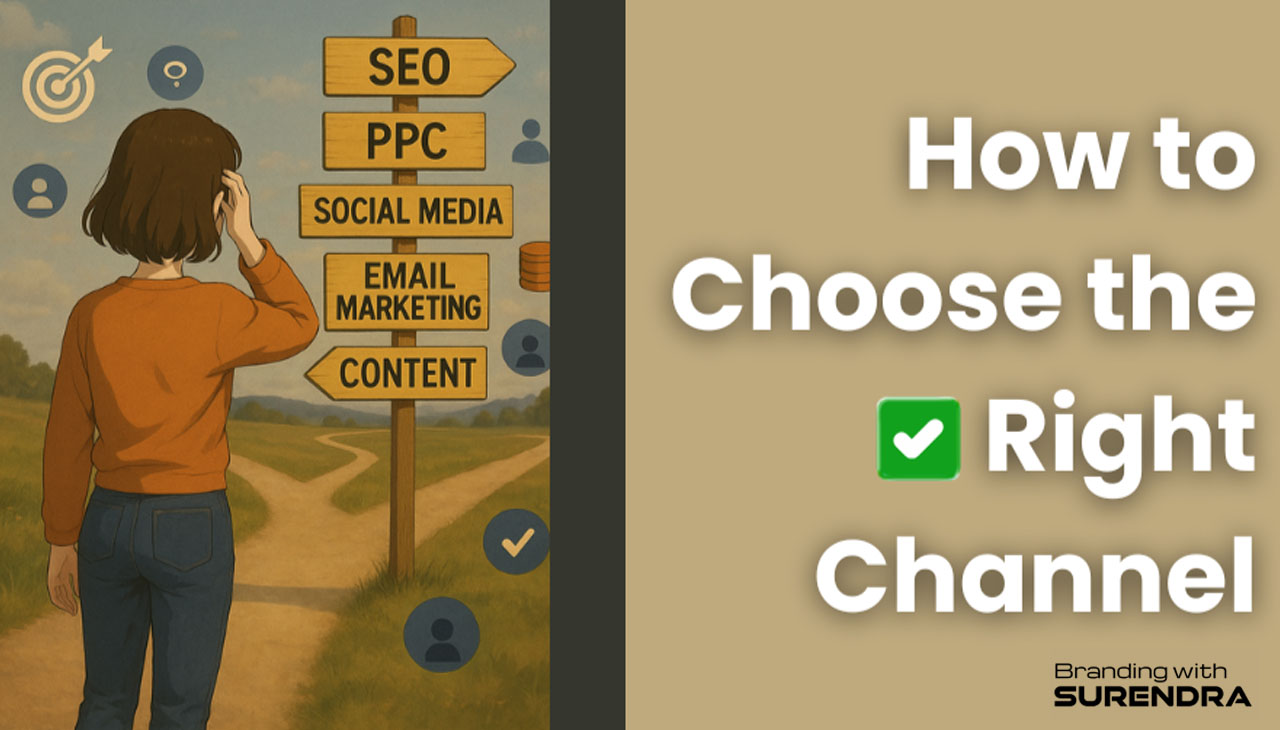
Choosing the Right Digital Marketing Channels: A Practical Guide
Choosing the Right Digital Marketing Channels: A Practical Guide In today’s fast‑moving digital landscape, businesses often struggle with one critical question: Which digital marketing channels should we focus on? With so many options—SEO, social media, paid ads, email marketing, content marketing—it is easy to waste time and budget by trying everything at once. The key to success is not being present everywhere, but being present where it matters most. This blog outlines a practical framework to help you choose the right digital marketing channels based on your goals, audience, and resources. 1. Start With Clear Marketing Goals Before selecting any channel, define what you want to achieve. Different goals require different approaches. Common digital marketing objectives include: Brand awareness – Making more people aware of your brand Lead generation – Collecting potential customer information Sales and conversions – Driving purchases or sign‑ups Customer retention – Keeping existing customers engaged Website traffic growth – Increasing site visits Thought leadership – Building authority in your industry When your goal is clear, channel selection becomes easier: SEO & Content Marketing → Long‑term traffic and credibility Paid Advertising (PPC) → Quick leads and conversions Social Media Marketing → Brand visibility and engagement Email Marketing → Nurturing leads and customer retention 2. Understand Your Target Audience Knowing your audience is just as important as knowing your goal. Ask yourself: Who are they? Where do they spend time online? How do they discover and evaluate brands? Different audiences prefer different platforms: Gen Z & Millennials → Instagram, YouTube, TikTok Professionals & B2B decision‑makers → LinkedIn, Email, Google Search Local customers → Google Search, Google Maps, Facebook Online shoppers → Google Ads, Instagram, Pinterest Selecting channels where your audience is already active increases engagement and reduces wasted spend. 3. Consider Budget and Timeframe Every marketing channel differs in cost and speed of results. Long‑term, cost‑effective channels: SEO Content marketing Email marketing These require patience but deliver sustainable growth. Faster, high‑impact channels: Google Ads (PPC) Social media advertising These generate quicker results but need consistent budget allocation. Your choice should depend on whether you need immediate results, long‑term growth, or a balanced approach. 4. Match Channels With Business Fit Not every channel suits every business. Choose channels that align with your business model and customer journey. Channel strengths at a glance: SEO – Long‑term visibility and trust PPC – Instant traffic and conversions Social Media – Engagement and brand awareness Email Marketing – Retention and repeat sales Content Marketing – Education, trust, and SEO support It is advisable to start with one or two core channels, master them, and then expand. 5. Practical Channel Combinations Here are some proven channel strategies for common scenarios: New product launch: Social Media Ads + PPC Long‑term organic growth: SEO + Content Marketing E‑commerce businesses: Email Marketing + Shopping Ads B2B services: LinkedIn Marketing + SEO + Email Campaigns These combinations balance reach, engagement, and conversions. 6. Measure, Optimize, and Scale Choosing channels is not a one‑time decision. Track performance using metrics such as: Traffic Leads Conversion rates Cost per acquisition ROI Analyze results regularly, optimize what works, and scale successful channels while dropping underperforming ones. Final Summary Successful digital marketing is about strategy, not saturation. When you clearly define your goals, understand your audience, manage your budget wisely, and choose channels that fit your business, your marketing efforts become more focused and effective. Start small, stay consistent, measure performance, and grow strategically. The right channels will always outperform many random ones. “If you want to build a strong personal brand and grow in Digital Marketing, Branding with Surendra offers practical training, real projects, and dedicated freelance services. Let’s begin your journey today.” Ask About My Services Join Course
How to Build a Powerful Personal Brand in 2026
Direct Answer: To build a powerful personal brand in 2026, you must combine niche expertise, authentic storytelling, AI-enhanced content creation, credibility signals, community building, and platform diversification. Personal branding in 2026 is a strategic blend of real value + digital presence + authority + human connection. TL;DR — Fast Recap 2026 is the year of authentic experts, not over-polished influencers. Clear niche + consistent value = fastest brand growth. AI tools help you scale, but your personality builds trust. Your brand must have proof, not promises. Websites, short videos, and communities drive the biggest impact. 1. Personal Branding in 2026: What’s Changed? In 2026, personal branding goes beyond posting content — it’s about building trust at scale. The biggest shifts: People follow experts, not entertainers. AI-generated content is everywhere → authentic human insights matter more. Micro-communities (WhatsApp, Telegram) outperform large audiences. Your personal brand is now your resume, portfolio, and business card. Your brand becomes your identity in the digital world. 2. Nail Your Niche (Be Known for Something Clear) Niche clarity is the base of your brand. Ask: Who do I help? What exact result do I deliver? What makes my approach unique? 2026 Niche Formula: 👉 I help (audience) achieve (result) through (method). Example:“I help creators build a profitable personal brand using storytelling and short-form content.” Niche clarity creates instant recognition. 3. Craft a Strong, Human Personal Brand Story In a world of AI-generated content, your human story becomes your superpower. Share: Your beginnings Your struggles Your turning point Your mission Your values Your long-term vision People connect to your why, not your job title. 4. Proof > Claims (2026’s #1 Rule) People don’t trust bold claims anymore — they trust evidence. Build credibility with: Testimonials Case studies Screenshots Student/Client wins Portfolio work Achievements Certifications Media mentions In 2026, “show, don’t tell” wins. 5. Create Value-Based Content Across Platforms Content is still king — but smarter, not harder. Best content for 2026: Short videos (Reels, Shorts) Carousels Case-study posts Story-based content Deep-dive LinkedIn posts YouTube tutorials Blog articles for AI search & Google Content themes: Education — teach something valuable Experience — share your journey Proof — results & wins Opinions — your unique voice Motivation — inspire your audience Consistency is the real differentiator. 6. Build a Personal Brand Website in 2026 Your website is your: Hub Portfolio Authority page Client funnel Personal Wikipedia A strong website includes: Clear hero section About story Services Results Blogs Testimonials Contact / WhatsApp button Your website strengthens trust and AI visibility. 7. Use AI to Amplify (Not Replace) Your Brand AI helps you: Generate content ideas Write scripts Optimize SEO Design digital assets Plan strategy Analyze audience behavior But your human voice and real experience build the emotional connection. 8. Collaborate for Faster Growth Collaboration = instant exposure + credibility. 2026 collaboration ideas: Reels collabs Podcast interviews Guest blogs YouTube collaborations Joint masterclasses Cross-promotions Every collaboration introduces you to a new audience. 9. Build a Community (2026 Growth Hack) Your personal brand becomes strong when you own your audience. Best platforms: WhatsApp Community Telegram Channel Discord Email Newsletter Communities build deep trust and long-term followers. 10. Convert Attention into Opportunities Your brand should bring: Freelance clients Course students Strategy calls Speaking invitations Partnerships Media features Always include: A CTA A way to contact you A place to learn more Audience → Leads → Clients → Success Final Summary To build a powerful personal brand in 2026: Define your niche clearly Tell a real, relatable story Show proof, not promises Create consistent value Build a strong website Use AI to scale Collaborate regularly Build a community Convert attention into clients & opportunities Your personal brand becomes unstoppable when you combine clarity + credibility + consistency. “If you want to build a strong personal brand and grow in Digital Marketing, Branding with Surendra offers practical training, real projects, and dedicated freelance services. Let’s begin your journey today.” Ask About My Services Join Course

What is Digital Marketing? A Complete Guide
Direct Answer: Digital marketing is the process of promoting products, services, or personal brands using online channels such as search engines, social media, websites, email, and paid ads to attract and convert the right audience. TL;DR — Fast Recap Digital marketing uses online tools (SEO, social media, email, ads). It’s measurable, targeted, and cost-effective compared to traditional marketing. Key channels: SEO, SEM, social, content, email, video, automation. Understanding Digital Marketing Digital marketing includes all marketing efforts that leverage the internet or digital technologies to reach customers. It focuses on platforms where people spend time: Google, YouTube, Facebook, Instagram, LinkedIn, and websites. Digital Marketing vs Traditional Marketing Below is a short comparison to highlight the practical differences. Feature Traditional Marketing Digital Marketing Cost High Low to Medium Audience Targeting Broad Highly targeted Results Tracking Difficult Real-time & exact Communication One-way Two-way, interactive Speed Slow Very fast Reach Mostly local Global audience Flexibility Hard to change Easy to optimize ROI Measurement Not clear Clearly measurable Major Channels & Platforms SEO — Rank organically on search engines. SEM / Google Ads — Paid search to capture intent-based traffic. Social Media — Engagement and brand building on platforms like Instagram, Facebook & LinkedIn. Content Marketing — Blogs, videos, guides to educate and attract your audience. Email Marketing — Nurture leads and convert customers over time. Video Marketing — YouTube, shorts, reels for high-engagement content. Marketing Automation — Scale communication with workflows and chatbots. How Digital Marketing Helps Different Businesses From startups to enterprises, digital marketing enables faster visibility, more precise targeting, and measurable ROI. It can be especially powerful for: Startups — Rapid traction with low budgets. Small businesses — Local targeting and cost-effective promotions. Organizations — Brand building, lead nurturing, and automation. Real Benefits Measurable results via analytics. Faster customer acquisition and higher ROI. Global reach with targeted spend. Better personalization and long-term customer relationships. “If you want to start your journey in Digital Marketing, Branding with Surendra provides practical training, real projects, and freelancing guidance. Contact now and begin building your digital career today.” Ask About My Services Join Course